













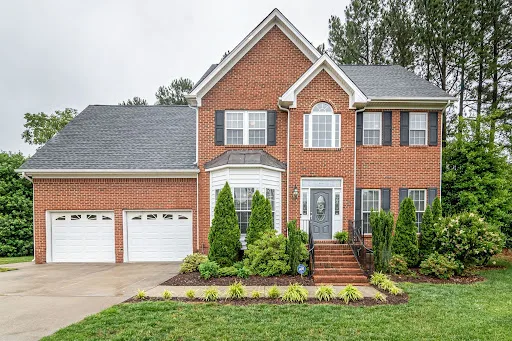
Brick veneer is one of the most durable and visually appealing cladding systems in commercial and residential construction. But even the most precise masonry installation is only as good as its moisture protection.
That’s where flashing becomes one of the most important components of a wall system. Water naturally penetrates brick and mortar over time, but proper flashing directs moisture back to the exterior before it can damage framing, insulation or interior finishes.
So what is the best flashing for brick veneer? There are many options on the market, each with different strengths, installation methods and long-term performance characteristics. Choices like copper vs. stainless steel or branded systems vs. alternatives usually come down to balancing durability, cost, compatibility and project requirements.
Why Flashing Matters in Brick Veneer Systems
Brick veneer walls are intentionally designed as drainage walls. A deliberate cavity is left between the brick and the structural wall to allow water to drain down and exit safely. Flashing is essential to collect that water and direct it out through weep holes before it reaches structural materials.
Without proper through-wall flashing, moisture problems can start to develop over time, including:
- Mold growth
- Corrosion of steel components
- Rotting sheathing or framing
- Interior leaks
- Freeze-thaw damage
- Efflorescence and staining
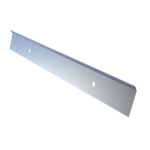
Flashing is typically installed at:
- The base of walls
- Shelf angles
- Window and door openings
- Roof-to-wall intersections
- Lintels
- Expansion joints
Industry guidance consistently emphasizes that flashing must extend fully through the wall system and integrate properly with the weather-resistant barrier (WRB).
Key Features to Look for in Masonry Flashing
Before comparing specific flashing systems, it helps to understand the qualities that matter most in masonry applications.
Durability
Flashing is expected to last for decades inside a wall assembly. Materials must resist punctures, UV exposure during installation, corrosion and chemical interaction with mortar.
Compatibility With Masonry
Some flashing products perform well in roofing applications but are not designed for masonry exposure. Masonry flashing must handle alkaline mortar environments and maintain adhesion over time.
Ease of Installation
Labor efficiency matters on large masonry projects. Flashing systems that simplify corner detailing, end dams and transitions can reduce installation errors and save time.
Structural Stability Across Cavities
Certain flexible membranes can sag within larger wall cavities, creating low spots where water collects. Rigid metal flashings often provide better spanning capability in these situations.
Long-Term Water Management
Good flashing systems should integrate seamlessly with drainage planes, air barriers and weep systems to create continuous moisture protection.
Types of Masonry Flashing Systems
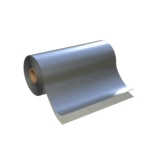
Copper Flashing Systems
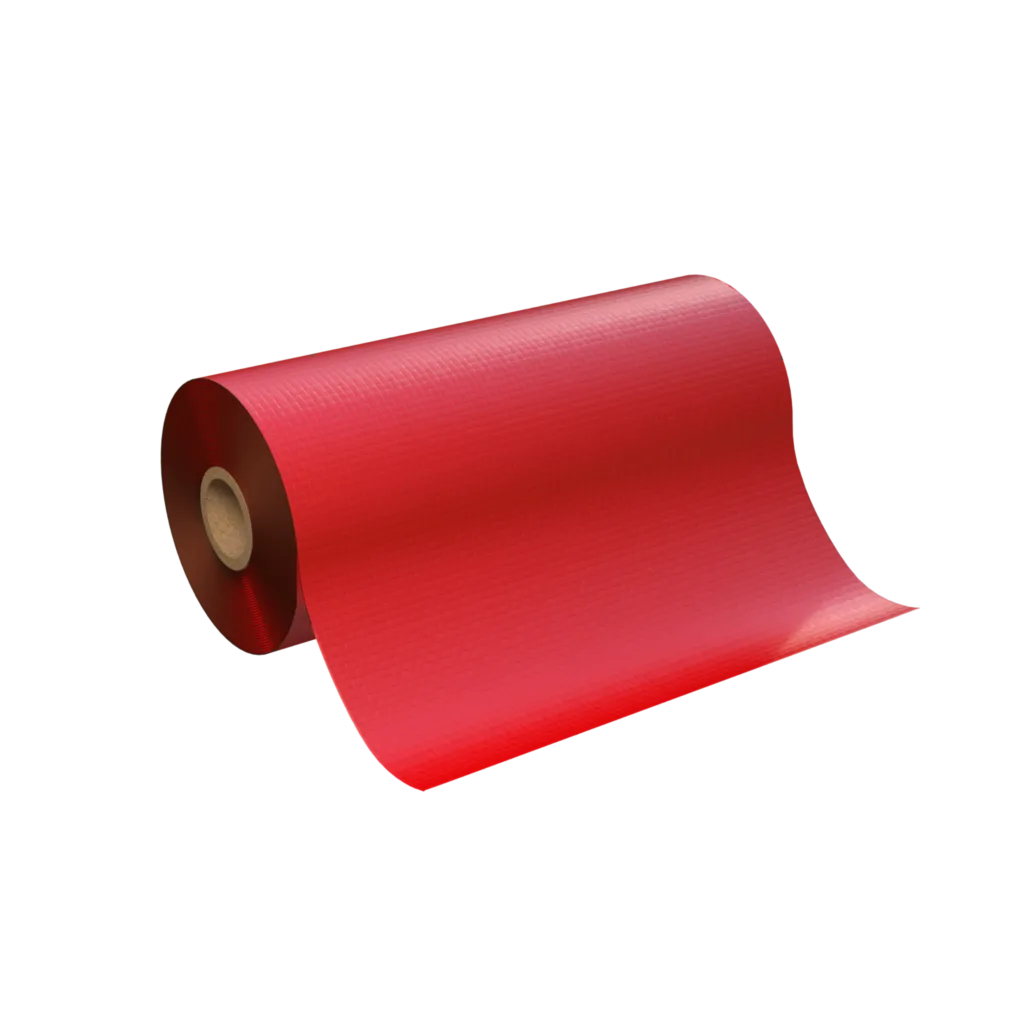
Copper has long been considered one of the premium choices for masonry flashing.
Advantages of Copper Flashing
Copper offers exceptional longevity and corrosion resistance. It also handles extreme temperature fluctuations well and remains stable over time. Many properly installed copper flashing systems can last the lifetime of the building.
Benefits include:
- Excellent durability
- Resistance to UV degradation
- Strong compatibility with masonry
- Easy soldered seams for watertight continuity
- Proven long-term performance
Copper is often preferred in institutional, historical and high-end commercial projects where longevity is prioritized.
Limitations of Copper Flashing
The biggest drawback is cost. Copper is significantly more expensive than many modern membrane systems. Material theft can also be a concern on some job sites. In addition, copper may react with certain adjacent metals if not detailed correctly.
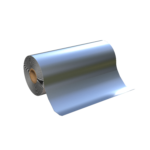
Stainless Steel Flashing Systems
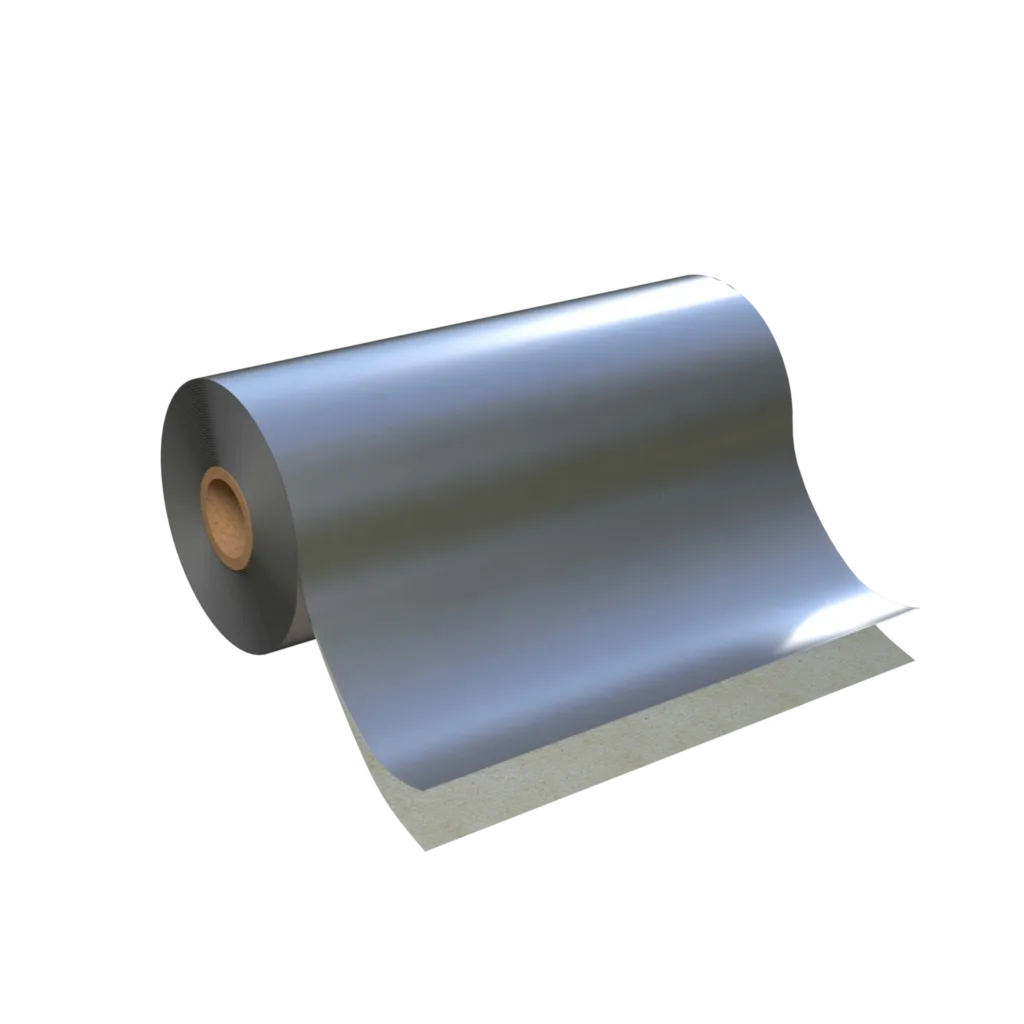
Stainless steel flashing has become increasingly popular in commercial masonry construction.
Advantages of Stainless Steel Flashing
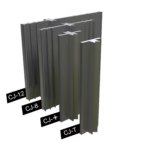
Stainless steel offers many of the same durability benefits as copper while providing excellent structural rigidity across wider cavities.
Benefits include:
- High corrosion resistance
- Strong structural stability
- Excellent lifespan
- Resistance to punctures and damage during installation
- Clean appearance at exposed drip edges
Industry experts often recommend rigid metal flashings for spanning cavity walls because they minimize sagging and maintain positive drainage.
Limitations of Stainless Steel Flashing
Stainless steel can be more difficult to fabricate in the field compared to flexible membranes. It may also require more specialized installation methods and accessories.
Cost is typically lower than copper but still higher than membrane-based systems.
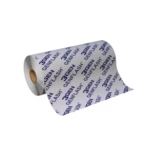
Rubberized Non-Asphaltic Flashing
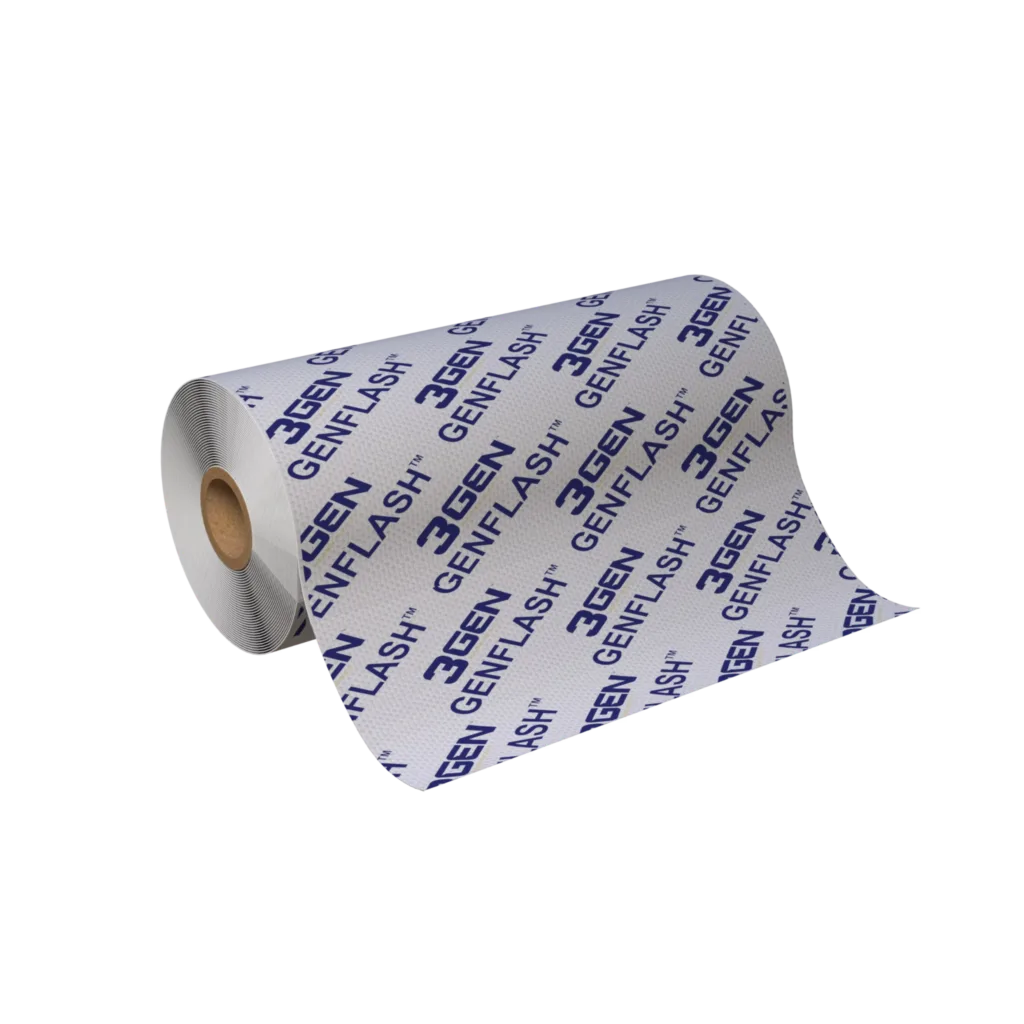
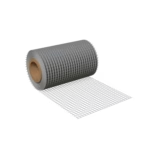
Rubberized non-asphaltic flashing systems are widely used in masonry veneer applications because of their flexibility and ease of installation.
Advantages of Rubberized Non-Asphaltic Flashing
These systems are self-adhered and conform well around penetrations and transitions. Contractors often prefer them for complicated detailing work.
Benefits include:
- Easier installation
- Good adhesion
- Lower material costs
- Flexible detailing
- Availability in multiple widths and configurations
Many modern masonry flashing products use rubberized non-asphaltic formulations specifically designed for masonry compatibility.
Limitations of Rubberized Non-Asphaltic Flashing
Rubberized non-asphaltic products can become vulnerable to UV light during prolonged construction schedules. Some products may also become brittle over time if improperly installed or exposed to the wall face. Temperature sensitivity during installation can also affect adhesion performance.
Butyl-Based Flashing Systems
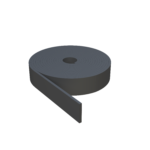
Butyl flashing systems have gained popularity as an alternative to traditional asphaltic-based membranes.
Advantages of Butyl Flashing
Butyl products generally offer:
- Better long-term flexibility
- Improved temperature resistance
- Strong adhesion
- Better compatibility with modern air barriers
- Reduced risk of staining
Many contractors like butyl systems because they remain flexible for longer periods and perform consistently across varying climates.
Limitations of Butyl Flashing
Cost is often slightly higher than that of asphalt-based membranes, while installation still requires careful substrate preparation to ensure proper adhesion.
Copper vs. Stainless Flashing: Which Performs Better?
One of the most common comparisons in masonry construction is copper vs. stainless steel flashing. Both materials are considered premium options, but the best choice often depends on the project’s priorities.
Copper May Be Best When:
- Historic preservation is important
- Maximum lifespan is the priority
- Soldered watertight seams are desired
- Budget is less restrictive
Stainless Steel May Be Best When:
- Structural rigidity is important
- Wider cavities must be bridged
- Modern commercial detailing is preferred
- Impact resistance matters
- Lower material costs are desired
In many modern commercial applications, stainless steel has become a preferred solution because it balances performance, durability and cost efficiency.
Mistakes to Avoid with Common Masonry Flashing
Even premium flashing materials can fail if installed improperly. Here’s what you need to know.
Incomplete Through-Wall Flashing
Flashing should extend completely through the veneer wall assembly to direct water outward. Partial or surface-installed flashing details often fail over time.
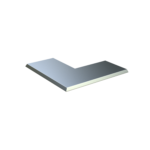
Missing End Dams
End dams prevent water from running laterally off the flashing into adjacent wall sections. Missing end dams are a common source of leakage.
Poor Integration With WRBs
Flashing must properly integrate with the weather-resistant barrier to maintain continuous drainage.
Improper Weep Placement
Flashing systems rely on functioning weeps to discharge water. Blocked or improperly spaced weeps can trap moisture inside the wall cavity.
Using Non-Masonry Flashing Materials
Some materials used in roofing or general waterproofing are not designed for masonry environments and may deteriorate prematurely.
Choosing the Right Flashing System for Your Project
The best flashing for brick veneer depends on the building type, exposure conditions, budget and wall assembly design.
For high-performance commercial projects, stainless steel or copper systems often provide the best long-term durability. For projects prioritizing installation speed and flexibility, butyl-based or rubberized asphaltic systems can offer practical advantages.
Regardless of material choice, proper detailing and installation are just as important as the flashing itself. A well-designed drainage strategy that integrates flashing, air barriers, cavity drainage and weeps is essential for long-term masonry performance.
Protect Your Brick Veneer the Right Way
Flashing isn’t an afterthought; it’s what makes a brick veneer system perform over the long term. Choosing the right solution means looking at the full picture: durability, material compatibility and how everything works together within the wall assembly.
Whether you’re weighing copper vs. stainless steel flashing or looking for alternatives to proprietary masonry products, the right materials and proper installation make a measurable difference in building performance and long-term maintenance costs.
Ready to find the right flashing for your next project? Contact 3GEN Masonry Products today.