












Masonry is one of the most durable building systems available, but it’s not immune to movement. Temperature changes, moisture expansion and structural shifts all cause brick and block walls to expand and contract over time. Without a way to manage that movement, cracking is almost inevitable.
That’s where expansion and control joints come in. Knowing where to place them and which type to use is essential for preventing cracking and extending the life of any masonry wall system.
What Are Movement Joints in Masonry?
Movement joints are intentional separations built into masonry walls to absorb the expansion, contraction and shrinkage that all masonry materials experience over time. Without them, that movement has nowhere to go, and the result is cracking.
The important thing to understand is that not all masonry moves the same way, and not all movement joints are the same thing. Using the wrong joint type for the material is one of the most common mistakes in the field.
Expansion joints (Clay Brick Walls)
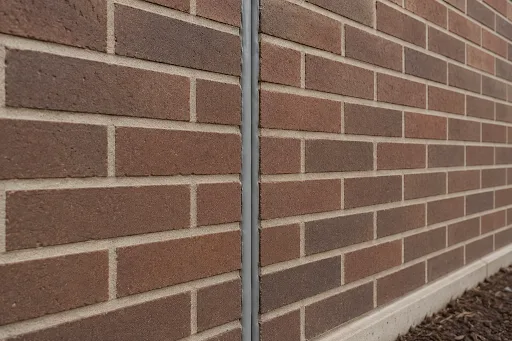
Clay brick expands over its lifetime as it absorbs moisture, and that expansion is cumulative and irreversible. Expansion joints leave a continuous, unobstructed gap through the brick wythe filled with a highly compressible material. As the brickwork expands, the joint partially closes. Project specifications should require sealants to conform to ASTM C920, Grade NS, Use M, with a minimum Class 50 compressibility rating. Silicone sealants are generally recommended.
Control Joints (CMU Walls)
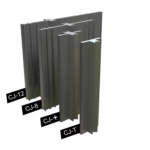
Unlike brick, CMU shrinks over time as it dries and cures. Control joints create a vertical plane of weakness so that shrinkage cracking happens at the joint in a straight, predictable line rather than randomly across the wall face. They are sealed with a backer rod and appropriate sealant to keep the joint weathertight while still allowing movement.
Joint Construction (Both Materials)
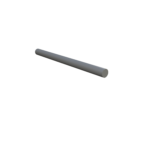
In both cases, you should use a circular foam backer rod sized about 25% larger than the joint width. This controls sealant depth, provides a surface to tool against and extends sealant life. Sealant depth should be approximately half the joint width, with a minimum of ¼ in. (6.4 mm).
What About Building Expansion Joints?
A building expansion joint is a different thing entirely. It runs through the entire wall assembly and structure to separate a building into independent sections, and is wider and more involved than a typical masonry movement joint. Don’t confuse it with the joint types above.
Why Proper Placement Matters
Poorly placed or missing movement joints can lead to:
- Random cracking across brick or block
- Water infiltration issues
- Long-term structural damage
- Increased maintenance costs
Strategic placement ensures that movement is absorbed where expected, keeping the wall both functional and visually appealing.
General Guidelines for Movement Joint Spacing
There’s no one-size-fits-all rule that applies to every project. Both material type and wall configuration affect the right answer. The guidelines below reflect current industry standards from the Brick Industry Association (BIA) and the Concrete Masonry & Hardscapes Association (CMHA).
| Material Type | Wall Condition / Assembly Type | Maximum Horizontal Joint Spacing |
| Clay Brick Veneer | Walls Without Openings | 25 Feet (7.6 m) |
| Clay Brick Veneer | Walls With Multiple Openings | 20 Feet (6.1 m) |
| Clay Brick Parapets | Exposed Top-of-Wall Sections | 15 Feet (4.6 m) |
| Standard 8-inch CMU | Minimum Horizontal Reinforcement (Ash >= 0.025 sq in/ft) | 25 Feet 4 Inches (7.72 m) |
| 4-inch / Half-High CMU | Veneers, Facings, & Specialized Units (Ash >= 0.034 sq in/ft) | 20 Feet (6.10 m) |
Clay Brick: Expansion Joint Spacing
Maximum vertical expansion joint spacing for brick veneer:
- 25 feet (7.6 m) for walls without openings
- 20 feet (6.1 m) for walls with multiple openings
In multi-story construction, horizontal expansion joints are also required immediately below each shelf angle, with a minimum quarter-inch gap of compressible material. In parapets, no section should exceed 15 feet (4.6 m) between joints.
Concrete Masonry (CMU): Control Joint Spacing
Horizontal reinforcement is not optional here. It works together with control joints to limit cracking, and joints alone are not sufficient. Maximum spacing with minimum horizontal reinforcement in place:
- Standard 8-inch CMU: 25 feet 4 in. (7.72 m), or a 1.5:1 panel length-to-height ratio, whichever is less
- Half-high CMU or CMU veneers: 20 feet (6.10 m), or a 1.5:1 ratio, whichever is less
For unusual conditions like dark units, wide temperature swings or irregular geometry, an engineered Crack Control Coefficient (CCC) calculation may be warranted. As a general rule, aim for panels as close to square as possible.
Key Locations for Movement Joints
Spacing guidelines give you the maximum distance between joints, but placement decisions should start with the building’s stress points first, then fill in the gaps to meet spacing requirements.
Changes in Wall Height or Thickness
These will always require a joint at the transition point, regardless of spacing.
Corners
Corners are natural stress concentrations. For brick, place a joint within 2 feet (600 mm) of the corner, if possible, and no further than 10 feet (3.0 m) on at least one side.
For CMU, stay within half your standard control joint spacing from the corner. In both cases, the combined distance on either side of the corner should not exceed your standard spacing interval.
Openings
Openings require different approaches depending on the material. For brick, align vertical expansion joints with window and door jambs, where possible. The perimeter sealant joint around the frame can often serve double duty.
For CMU, use reinforced detailing (joints offset away from the opening, reinforcement at the jambs) in load-bearing walls, and isolated detailing (joints flanking the opening with a slip plane at the lintel) in non-load-bearing walls. Don’t mix the two approaches.
Wall Intersections, Material Transitions, Uninterrupted Runs
These all need joints: at the intersection, at every change in cladding material and wherever a wall run exceeds the maximum spacing interval without hitting a natural breakpoint.
The Role of Moisture and Temperature
Environmental conditions significantly affect how much movement a wall experiences, and therefore how hard your movement joints have to work.
Dark-colored walls (which absorb more heat), south-facing elevations and locations with wide seasonal temperature swings will all experience more movement than shaded or interior-facing walls.
Clay brick in wet climates accumulates more irreversible moisture expansion over time. CMU in hot, dry conditions may shrink more rapidly after installation. Both factors should inform where you place joints and how closely you space them, especially in extreme climates.
Integrating Flashing and Moisture Protection
Movement joints are also potential entry points for water if not properly detailed. This is where high-performance flashing and moisture management products come into play.
Using GENFLASH®️ for Joint Protection
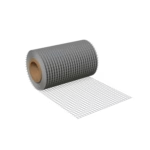
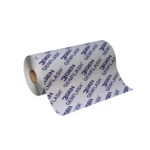
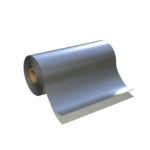
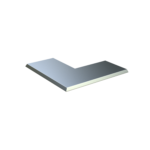
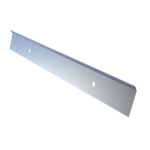
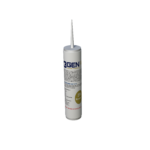
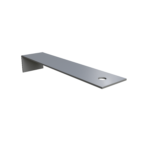
When integrating movement joints into a wall system, proper flashing is essential. GENFLASH®️ from 3GEN Masonry Products is designed to create a durable, watertight seal that helps prevent moisture intrusion at critical points, such as joints and transitions.
It works in conjunction with sealants and backer rods to maintain flexibility while protecting the wall assembly.
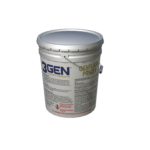
Enhancing Durability with Mortar Clear™️
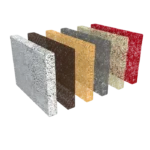
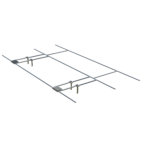
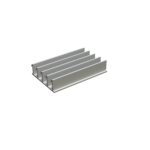
Mortar droppings inside wall cavities can bridge gaps and compromise drainage systems. Mortar Clear™️ helps prevent this by suspending mortar before it can block weep holes or interfere with flashing performance — especially important near movement or control joints, where the risk of moisture is higher.
Reducing Thermal Transfer with THERM-A-BREAK™️
THERM-A-BREAK™️ can be incorporated into wall assemblies to reduce thermal bridging. While not directly a control joint product, it plays a role in minimizing temperature-related movement by improving the wall’s thermal efficiency. Less thermal stress means reduced movement and ultimately, less strain on these joints over time.
Common Mistakes to Avoid
Even experienced professionals can run into issues with expansion or control joints. Here are some of the most common mistakes:
Inconsistent Spacing
Ignoring recommended spacing guidelines or placing joints unevenly can lead to unpredictable cracking.
Misaligned Joints
Movement joints should align with structural elements and architectural features whenever possible. Random placement can compromise both performance and appearance.
Using the Wrong Joint Type
Placing a control joint in brick veneer, or an expansion joint in CMU, is a common error that leads to poor performance. Match the joint type to the material
Poor Sealing
Using the wrong sealant or installing it incorrectly can allow water infiltration and reduce the joint’s effectiveness.
Skipping Joints Altogether
In an effort to save time or cost, some projects omit movement joints entirely. This almost always leads to cracking and costly repairs down the line.
Best Practices for Long-Term Performance
To get the most out of your movement joints:
- Use the correct joint type for the material: expansion joints for brick, control joints for CMU
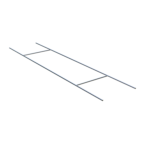
- Follow industry spacing guidelines and pair CMU control joints with the required horizontal reinforcement
- Place joints at natural stress points and transitions first, then fill in to meet maximum spacing
- Use high-quality flashing and moisture management products
- Ensure proper installation of sealants and backer materials
- Coordinate joint placement with architectural design from the start
Planning ahead during the design phase is far more effective than trying to fix issues after construction.
Building Smarter Masonry Systems
Expansion and control joints may not be the most visible part of a masonry wall, but they’re one of the most important. When placed correctly and detailed properly, they quietly do their job — absorbing movement, preventing cracks, and protecting the structure for years to come.
Every masonry project without proper control joints is a liability waiting to happen. Contact 3GEN Masonry Products today and get expert guidance before you break ground.