











Masonry walls are built to last, but durability alone doesn’t prevent cracking. Temperature swings, differential settlement and lateral loads all create tension within a wall system over time and without the right reinforcement, that tension eventually shows.
Truss and ladder joint reinforcement are two of the most widely used solutions. Both are embedded in the mortar joints of CMU BACKUP WALLS, and both serve the same fundamental purpose: distributing stress to maintain structural integrity. But their designs differ and so do the conditions where each performs best.
For contractors, architects and engineers, knowing the distinction can make a meaningful difference in long-term wall performance.
What Is Masonry Joint Reinforcement?
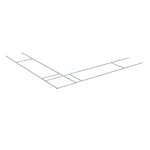
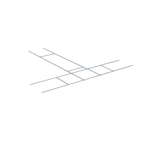
Masonry joint reinforcement consists of welded steel wires embedded in the horizontal mortar joints of concrete masonry unit (CMU) walls. Once the next course of masonry is placed, the reinforcement becomes part of the wall assembly, strengthening the wall, controlling cracking and spreading forces across a wider area.
It’s typically installed every few courses, depending on wall design, and is especially important in large spans where movement and structural stress are more likely. Common applications include improving crack resistance, increasing wind and seismic resistance and adding overall stability to the wall system.
3GEN Masonry Products offers joint reinforcement designed to work within complete wall systems, alongside moisture protection products like GENFLASH® and drainage solutions like Mortar Clear™, helping to maintain proper cavity wall performance from the ground up.
What Is Ladder Joint Reinforcement?
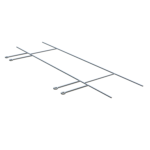
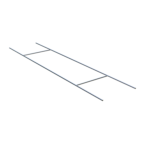
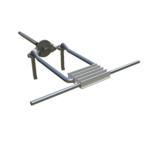
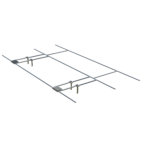
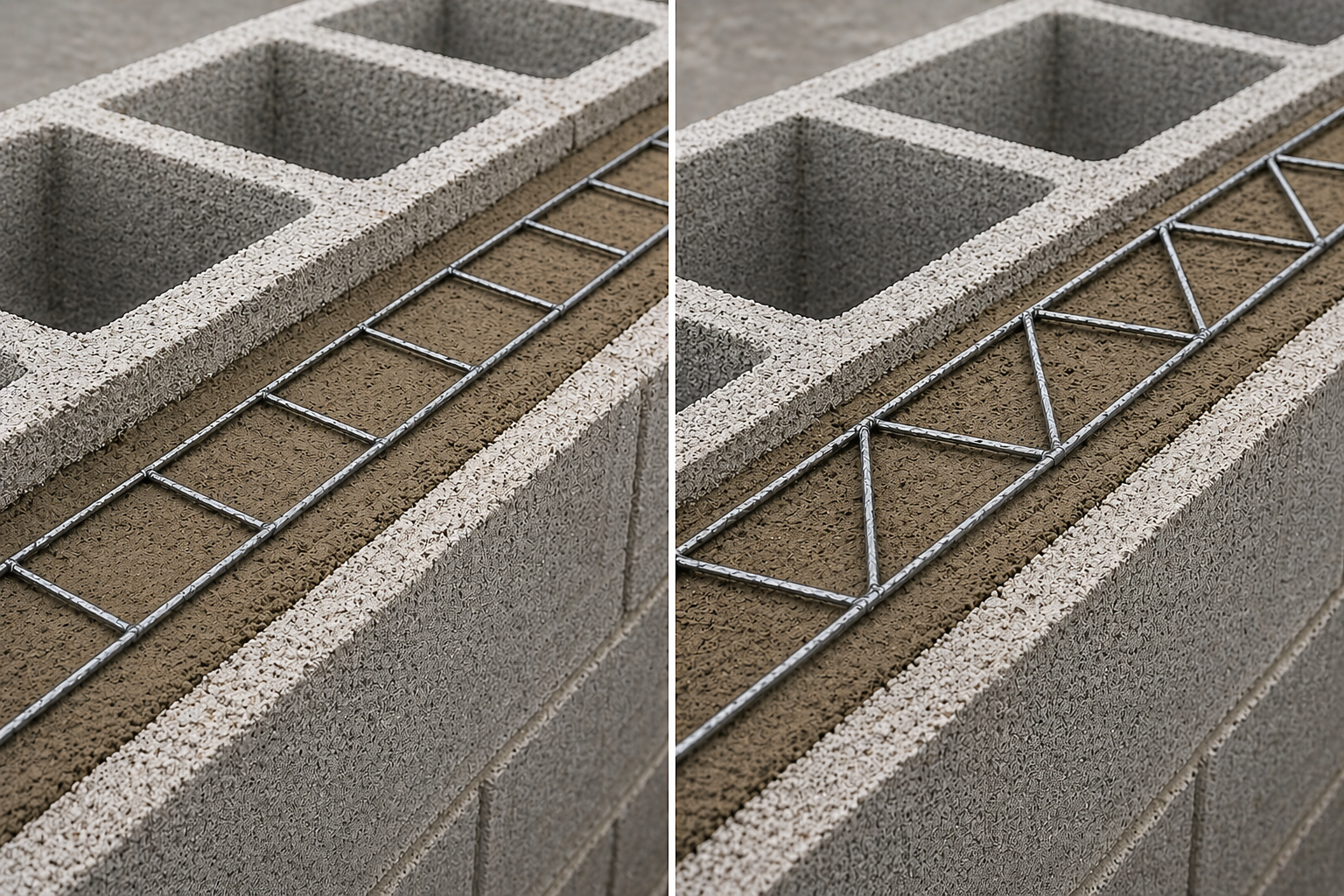
Ladder joint reinforcement gets its name from its shape. The system consists of two parallel steel wires connected by straight cross wires that resemble the rungs of a ladder.
This reinforcement is placed directly into the mortar bed as each course of masonry is installed. Once embedded, it strengthens the wall and helps control cracking.
How Ladder Reinforcement Works
Because the cross wires run straight across, ladder reinforcement leaves open spaces between the wires. These openings do not interfere with quality grouting of CMU block cells or vertical rebar reinforcement.
This feature makes ladder reinforcement particularly useful in cavity wall construction, where brick veneer is connected to a structural backup wall.
Ladder reinforcement is commonly used alongside other cavity wall components, including moisture barriers like GENFLASH®️ and thermal control materials such as THERM-A-BREAK™️, which help reduce thermal bridging in masonry wall systems.
What Is Truss Joint Reinforcement?
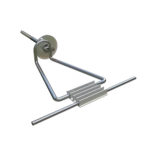
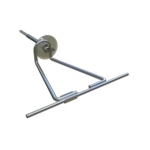
Truss joint reinforcement uses a different internal design. Instead of straight cross wires, it features diagonal wires arranged in a repeating triangular pattern. These diagonal wires form a structure that resembles a small truss system within the mortar joint.
How Truss Reinforcement Works
Truss joint reinforcement features two longitudinal wires connected by diagonal cross wires, forming a triangular configuration. This design increases stiffness and distributes loads more evenly along the wall.
While truss reinforcement is stronger and stiffer than ladder type within the plane of the wall, these characteristics become a drawback in multi-wythe construction. The rigid diagonal cross-wires prevent each wythe from moving independently, which is a critical limitation when differential movement from thermal expansion, moisture changes or settlement is expected.
The more significant concern is how the diagonal cross-wires interact with other wall components. They frequently conflict with vertical rebar placement within grouted CMU cells and obstruct grout flow, compromising the structural integrity of the wall. When interference occurs, masons will often simply cut the diagonal wire, compromising the reinforcement entirely.
Key Differences Between Ladder and Truss Reinforcement
While both ladder and truss reinforcement systems strengthen masonry walls, they are rarely interchangeable — each suits a different type of construction.
Structural Design
The most fundamental difference is the wire configuration. Ladder reinforcement uses straight cross rods welded between two parallel wires, creating an open structure that leaves space within the mortar joint for rebar and grout flow. Truss reinforcement uses diagonal wires in a triangular pattern, which increases rigidity but restricts what can occupy the joint around it.
This distinction matters because the two types are generally suited to different wall assemblies. Ladder reinforcement is the standard choice for cavity wall systems and CMU backup walls, where veneer anchors attach to the backup and the joint reinforcement must accommodate them.
Truss reinforcement, by contrast, is better suited to solid or composite wall systems where that added rigidity is an advantage and the interference issues it creates in grouted CMU construction are not a concern.
When Ladder Reinforcement Is the Best Option
Ladder joint reinforcement is the preferred choice in most modern masonry construction due to its flexibility and compatibility with other wall components. Its open configuration allows each wythe to move independently and its straight cross rods avoid conflict with vertical rebar, allowing grout to flow freely into CMU cells.
It is commonly used in projects such as:
- Brick veneer walls
- Cavity wall systems
- CMU backup walls
- Masonry assemblies that require anchors or ties
Because its open design works well with veneer anchors and other cavity wall components, ladder reinforcement is widely specified in both commercial and residential construction.
When Truss Reinforcement Is the Right Choice
Structural masonry walls and load-bearing CMU systems are common applications where truss reinforcement may be preferred. The triangular wire pattern provides stronger internal bracing within the mortar joint, helping distribute loads across the wall.
Engineers may choose truss reinforcement for projects where structural performance is the primary concern and there is no interference with vertical reinforcement.
Built-In Strength Starts with the Right Choice
Both ladder and truss reinforcement play important roles in strengthening masonry walls and each system offers distinct advantages depending on wall design and project requirements.
Ladder reinforcement is widely used for its ease of installation and compatibility with masonry anchors and cavity wall components. Truss reinforcement delivers greater rigidity, making it a strong choice for structural masonry walls that demand additional stiffness.
Selecting the right system comes down to wall type, structural loads and compatibility with surrounding masonry materials — and getting it right from the start means fewer problems down the line.3GEN Masonry Products offers a complete range of reinforcement systems built for real-world performance. Explore our solutions today and build with confidence.